
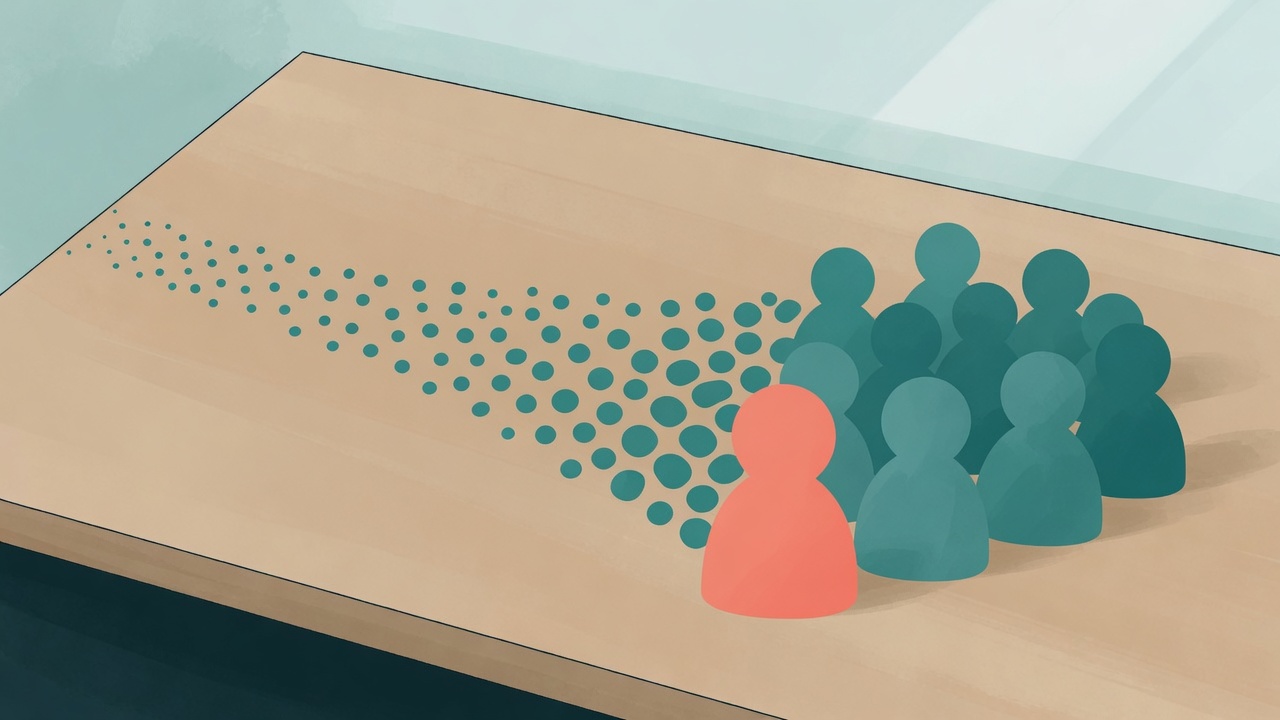
Your first ten YouTube subscribers might feel like a small achievement.
Then you reach fifty.
A hundred.
And suddenly, something interesting happens.
People you don't personally know are choosing to follow your content.
They're subscribing because they want to see what you create next.
That's an important milestone.
Your first 1,000 YouTube subscribers aren't just a number on your dashboard. They represent the beginning of an audience.
But getting there can be difficult.
You might spend hours creating a video only to receive a handful of views.
Another creator appears to gain thousands of subscribers overnight.
It's easy to assume you're doing something wrong.
The reality is that YouTube growth is unpredictable, and there is no guaranteed method for reaching 1,000 subscribers within a specific period.
However, there are practical ways to improve your content, attract relevant viewers, and give people a stronger reason to subscribe.
Here's how to build that foundation in 2026.
Why Are Your First 1,000 YouTube Subscribers Important?
Reaching 1,000 subscribers is a meaningful audience milestone.
It's also part of YouTube's standard eligibility requirements for advertising monetization.
As of October 2026, creators generally need 1,000 subscribers plus either 4,000 qualifying public watch hours from long-form videos within 12 months or 10 million qualifying public Shorts views within 90 days to meet the standard advertising thresholds.
Other conditions and channel review requirements apply.
YouTube also provides access to some monetization features at lower thresholds for eligible creators in supported regions. See the YouTube Partner Program eligibility requirements.
But there's an important distinction.
Having 1,000 subscribers doesn't automatically mean your channel will earn money.
You still need qualifying content, eligibility, and an appropriate monetization strategy.
That's why your priority should be building an audience that genuinely wants your videos.
Tip 1: Give People a Clear Reason to Subscribe
Imagine discovering two YouTube channels.
The first publishes random videos about unrelated topics.
The second explains one fascinating scientific question every day.
Which one gives you a clearer reason to subscribe?
Probably the second.
That's because viewers understand what they're going to receive.
A focused channel creates a recognizable promise.
Define your target audience
Before creating your next video, answer three questions.
Who are you creating content for?
What are those people interested in?
What will they gain by subscribing?
For example, your audience might be curious adults who enjoy learning interesting facts.
Your channel could explain scientific mysteries through short videos.
The value is clear.
Your audience gets accessible explanations of interesting subjects.
Example: Building a focused channel
Imagine creating a channel called Everyday Science Explained.
Your description could say:
"Understand the science behind everyday life through short, easy-to-follow videos."
Now consider your content ideas.
You could explain why ice floats, how rainbows form, or what causes static electricity.
Each topic serves the same audience.
Someone who enjoys one explanation may be interested in several others.
That's far more useful than attracting people with unrelated videos that don't encourage them to return.
Make your channel recognizable
Your name, profile image, banner, descriptions, and video style should support the same identity.
You don't need expensive branding.
A simple, consistent presentation is enough to communicate professionalism.
The purpose is to make your channel easy to understand and remember.
Tip 2: Create Videos Around Questions People Already Ask
A common beginner mistake is creating content without considering whether anyone is interested in the subject.
You might find a topic fascinating, but that doesn't automatically mean it has an audience.
Research helps you understand what viewers want to learn.
Start with YouTube search
Type a relevant phrase into YouTube's search bar.
Look at the suggested searches and related videos.
These can help you identify questions people may be exploring.
You can also examine comments on relevant videos.
What do viewers ask?
Which explanations do they find confusing?
Are there interesting questions that existing videos haven't answered clearly?
These observations can become ideas for original content.
Example: Researching a history channel
Suppose you're building a faceless history channel.
Instead of publishing a general video called "Interesting History Facts," you could create a focused explanation titled:
"Why Was the Great Wall of China Built?"
Or:
"What Happened to the Library of Alexandria?"
These titles clearly communicate what the viewer will learn.
Your video still needs to provide an accurate, satisfying answer.
The title attracts interest, while the content fulfills the promise.
Don't rely on keywords alone
Descriptive titles can help viewers understand your videos, but keyword repetition won't compensate for weak content.
Avoid misleading titles or exaggerated promises.
A useful title should communicate one clear benefit or question.
For example:
Weak: "You Won't Believe This Amazing Secret!!!"
Stronger: "Why Does the Moon Look Bigger Near the Horizon?"
The second title is more specific and tells viewers what to expect.
Tip 3: Use YouTube Shorts to Test Your Content
YouTube Shorts offers a way to introduce your videos to people who may not already subscribe to your channel.
Shorts can appear in the Shorts Feed, search results, channel pages, and other areas of YouTube.
They can help you discover which subjects and storytelling approaches resonate with viewers. See YouTube's Shorts introduction.
However, simply uploading Shorts does not guarantee audience growth.
You still need content worth watching.
Focus on the first few seconds
Viewers can quickly move past a Short that doesn't interest them.
Try starting with the most compelling part of your story.
Example:
Imagine creating a video about an ancient engineering achievement.
Instead of opening with your channel name and a long introduction, begin with the central question.
"How did ancient builders move enormous stone blocks?"
Then explain the historical evidence and the relevant engineering techniques.
A focused opening helps viewers understand the video's purpose.
Make the ending satisfying
Some videos start with interesting questions but never provide meaningful answers.
That can leave viewers disappointed.
Your content should deliver what the opening promises.
If you ask a scientific question, provide a clear explanation.
If you introduce a historical mystery, explain what historians know and what remains uncertain.
If you demonstrate a tool, show the actual result.
The goal is to earn attention through useful content.
Example: Testing different openings
Suppose you create educational videos about geography.
You publish several videos using direct questions and several using surprising observations.
Afterward, you compare engaged views and how frequently people choose to continue watching.
You may discover that your audience responds more strongly to one approach.
Use that information to develop future videos.
Don't assume every audience responds identically.
Tip 4: Turn Casual Viewers Into Returning Subscribers
A video can receive thousands of views without attracting many subscribers.
Why?
Because enjoying one video doesn't automatically mean someone wants to follow the entire channel.
You need to communicate what comes next.
Build a recognizable series
A recurring content series makes your channel easier to understand.
For example, a faceless science channel could publish One Question About Science.
Each episode answers a different question.
The series title communicates the format.
The consistent subject gives viewers a reason to return.
Practical example:
Imagine someone watches your video explaining why some animals glow in the dark.
At the end, you say:
"Subscribe for another fascinating science question tomorrow."
That invitation is directly related to what the viewer just enjoyed.
It's more meaningful than an unrelated request for subscribers.
Don't interrupt every video with repeated requests
You don't need to ask people to subscribe every few seconds.
Focus on delivering the promised value.
Then provide a brief invitation at a natural moment.
For some videos, the best moment is the end.
For others, it may be after an especially useful explanation.
The most important thing is showing people why they should want more.
Organize related content
Playlists and clear channel organization can help people discover your other videos.
For example, you might organize a science channel around space, nature, and everyday physics.
Someone interested in one topic can easily explore related content.
That supports a more coherent viewing experience.
Tip 5: Study Analytics and Improve Your Publishing Strategy
YouTube Studio provides valuable information about how viewers interact with your content.
Instead of obsessing over every change in view counts, use your analytics to make practical decisions.
For Shorts, useful metrics include engaged views, viewer retention, subscribers gained, and how frequently viewers choose to continue watching.
YouTube also provides information about returning viewers and content that contributes to subscriber growth. See YouTube Analytics help.
Example: Comparing two videos
Imagine publishing two educational Shorts.
Video A: Receives 10,000 views and attracts eight subscribers.
Video B: Receives 2,000 views and attracts twenty subscribers.
These are hypothetical results.
Video A attracted more public views.
But Video B generated more subscribers despite receiving fewer views.
That's worth investigating.
Perhaps Video B addressed a more focused audience.
Perhaps its subject was more closely related to your channel's overall identity.
Or perhaps it communicated a clearer reason to subscribe.
You don't need to immediately copy Video B.
Instead, examine what might explain the difference and test those ideas with future videos.
Establish a realistic publishing schedule
Consistency gives you repeated opportunities to learn.
However, there's no universal rule that you must publish every day.
Start with a schedule you can sustain.
For example, three or four original videos per week may be manageable while you're learning.
If you can maintain quality at a higher frequency, you can experiment with publishing more often.
YouTube's own creator guidance recommends choosing a schedule that works for both you and your audience. See YouTube's posting schedule guidance.
Use AI to simplify repetitive tasks
If production time is your biggest challenge, consider AI-assisted tools.
For example, PilotReels helps creators produce faceless short-video series by handling scripts, narration, visuals, captions, and supported platform publishing.
You choose the subject, language, style, and schedule.
This can make it easier to maintain a regular publishing routine.
However, automation doesn't guarantee subscribers.
Your videos still need original ideas, useful information, and a clear creative direction.
A 90-Day Plan for Building Your First Audience
Treat your first 90 days as a period of experimentation and improvement.
Days 1–30: Establish Your Channel
Choose one niche and define your audience.
Set up your channel identity, prepare your initial video ideas, and begin publishing.
Focus on learning the production process.
Review how viewers respond to different topics and openings.
Don't expect immediate results.
Days 31–60: Identify Your Strongest Topics
Look at your videos as a group.
Which subjects receive better engagement?
Which attract subscribers?
Which generate useful questions or comments?
Develop more original videos around promising themes while continuing to test new ideas.
Days 61–90: Improve Your Content System
By this stage, you should have a clearer understanding of your production process and early audience response.
Refine your series, update your content calendar, and improve weak areas.
Consider whether additional formats, such as longer educational videos, would serve your audience.
Continue measuring progress without assuming that 90 days is enough to reach a particular subscriber milestone.
The purpose is to develop a stronger channel, not chase an arbitrary deadline.
Common Mistakes That Slow Down YouTube Growth
One mistake is choosing unrelated topics simply because they appear popular.
Another is focusing entirely on the number of videos published without improving the content.
Some creators also buy subscribers or attempt to manipulate engagement.
That doesn't build genuine audience interest and can violate YouTube's policies.
Finally, many beginners quit after publishing only a few videos.
Early performance can be disappointing, but a small number of uploads rarely provides enough information to understand what your audience wants.
Build a useful collection of content, study the results, and improve deliberately.
Frequently Asked Questions
How Long Does It Take to Get 1,000 YouTube Subscribers?
There's no guaranteed timeline. Some channels grow quickly, while others take considerably longer. Your results depend on audience demand, content quality, competition, consistency, and other factors.
Can You Get 1,000 YouTube Subscribers Using Only Shorts?
Yes. Subscribers gained through Shorts count toward your channel's subscriber total. However, reaching 1,000 subscribers alone doesn't satisfy all requirements for advertising monetization.
Can I Grow a YouTube Channel Without Showing My Face?
Yes. Faceless formats such as original educational videos, storytelling, science explanations, and tutorials can attract subscribers. The most important factors are the quality and relevance of the content.
Start Growing Your YouTube Channel With PilotReels
Your first 1,000 subscribers begin with the first viewer who decides your content is worth following.
You don't need an expensive camera or professional studio to begin.
You need a clear topic, valuable videos, and a production routine you can maintain.
PilotReels helps simplify faceless short-video creation, so you can focus more on your content ideas and audience.
Set up your series, choose its style, and prepare a consistent publishing schedule.
Then keep learning from your results.